This project is made possible through the generous support of the Village on the Lake HOA and the Clackamas Soil and Water Conservation District, along with OLWC program resources.
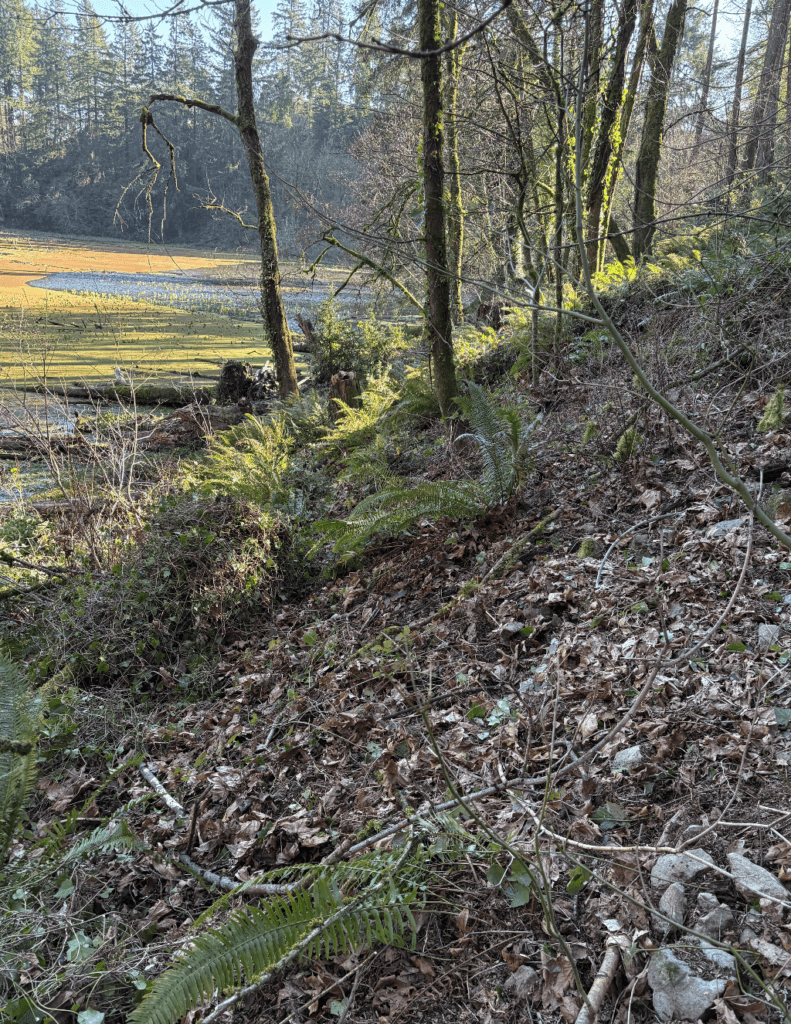
The Lily Bay restoration project is located in the Village on the Lake neighborhood, off Lily Bay Court, Lake Oswego, on approximately nine acres of HOA-owned common property known as Tract A. The site includes 4.37 acres of aquatic habitat and 4.63 acres of surrounding wetland and riparian area, fed by Lily Pond Creek. Historically, the upland and riparian areas were logged and are now dominated by aging alder, cottonwood, Douglas-fir, and big-leaf maple.
Get Involved
Volunteers are essential for invasive plant removal, native planting, and creek stewardship. Join us to help restore Lily Bay and support the health of this vital urban wetland and riparian corridor.
Coordinator: Rio Hybert rio@oswegowatershed.org
Invasive plants such as English ivy, Himalayan/Armenian blackberry, and yellow archangel cover over 50% of the terrestrial area, affecting understory biodiversity, water quality, and wildlife habitat. Lily Bay itself occasionally experiences dense growth of duckweed, azolla, and over an acre of yellow flag iris.
The restoration strategy focuses on removing invasive species, stabilizing the creek channel, and reintroducing native plants to restore ecosystem function. Stone dams and live-stake plantings will slow water velocity, reconnect the creek to its natural floodplain, and support soil retention. Native sedges, rushes, grasses, and shrubs will improve water filtration, enhance habitat, and increase native plant diversity. This project builds on prior volunteer efforts and engages the community in long-term stewardship.
Project Goals
The project aims to improve water quality, reduce invasive species, restore native vegetation, stabilize creek banks, enhance wildlife habitat, and engage community members in hands-on stewardship.
This effort is a collaboration between the Village on the Lake HOA, OLWC staff and volunteers, and technical partners including the Clackamas Soil and Water Conservation District (CSWCD) and LakeCorp. Together, these partners provide the labor, expertise, and local support necessary to restore and maintain Lily Bay’s wetland and riparian ecosystems.
Restoration work focuses on three main activities. First, invasive species removal targets English ivy, Himalayan blackberry, yellow flag iris, and other non-native plants. Second, native planting and revegetation restores the understory and wetland vegetation with native trees, shrubs, grasses, sedges, and forbs. Finally, waterway stabilization and habitat enhancement slows water flow, reduces erosion, and improves habitat for aquatic and terrestrial wildlife.
Through these activities, the project expects to restore approximately nine acres of wetland, riparian, and upland habitat; re-establish native plant communities; improve water quality; enhance wildlife habitat; and engage community volunteers in hands-on restoration and stewardship.