The restoration strategy focuses on removing invasive species, especially in the understory, which have altered hydrology, reduced canopy cover, and increased wildfire risk. Following invasive removal, we implement strategic native plantings to recreate the structure and composition of a healthy oak woodland, while improving habitat for oak-reliant wildlife.
Project goals
The project aims to improve water quality, enhance wildlife habitat, increase native plant cover, support climate resilience, and engage community members in hands-on stewardship of local oak woodland ecosystems.
This project is made possible through a strong collaboration of community and organizational partners, including the Rotary Club, community volunteers, Woodside Circle HOA residents, the Clackamas Soil and Water Conservation District (CSWCD), Lake Corps, and HOA representatives. Together, these partners provide the labor, expertise, and local support needed to restore and maintain healthy oak woodland habitat along the Oswego Canal.
Restoration work focuses on three main activities. First, invasive species removal targets dense infestations that have diminished biodiversity and degraded woodland habitat. Second, native planting and revegetation restores both the understory and canopy composition using native species such as Oregon white oak, Serviceberry, and Oregon ash. Finally, wildlife habitat enhancement expands habitat for oak-reliant species, including the Acorn Woodpecker, Slender-billed White-breasted Nuthatch, and Western Gray Squirrel.
Through these activities, the project expects to restore 8 acres of oak woodland habitat, install 3,000 native plants, enhance canopy diversity and understory composition, improve habitat for oak-reliant species identified as Strategy Species in the Oregon Conservation Strategy, and engage community volunteers in hands-on habitat restoration.
Get Involved
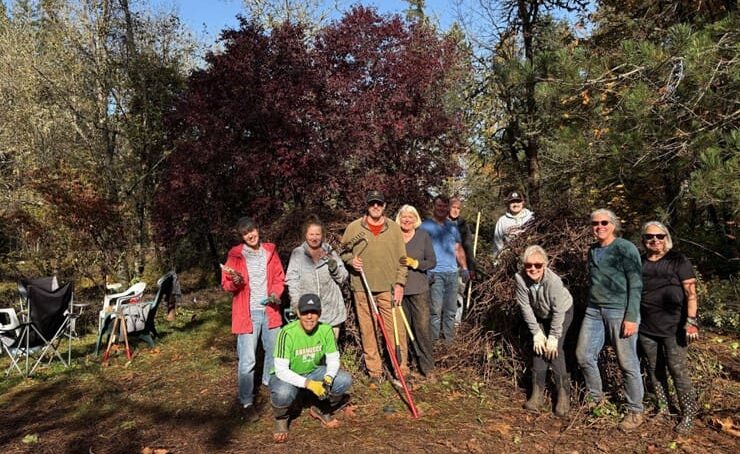
Volunteers are essential for removing invasive plants and planting natives. Join us to help restore this urban oak woodland and support the health of the Oswego Canal watershed.
Before Pictures
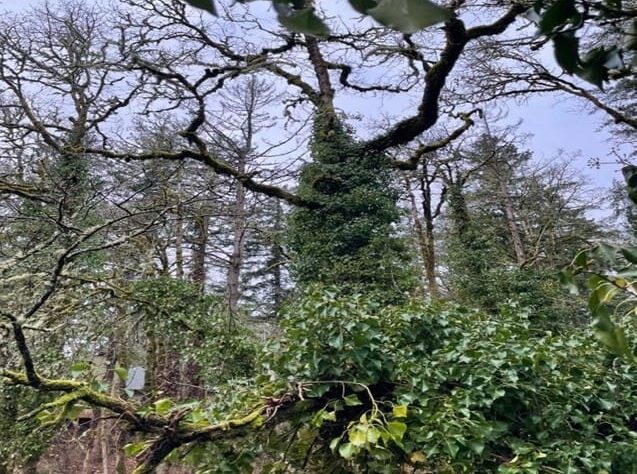
Tree ivy along west woods (Fall 2023)
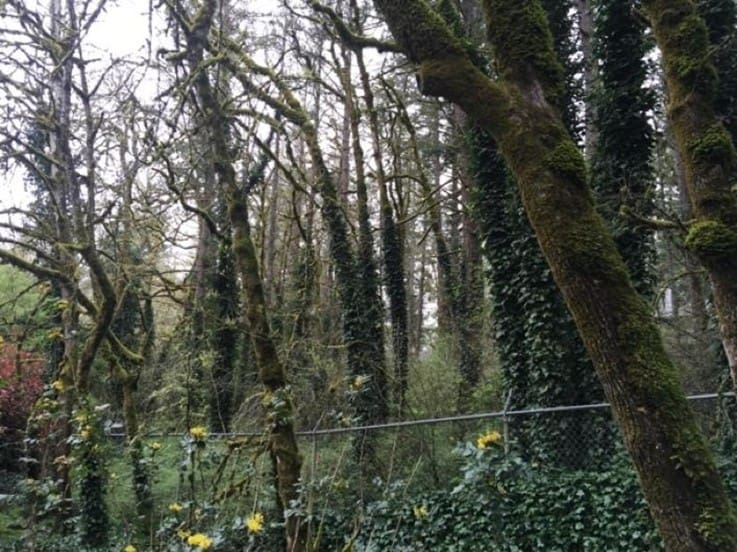
Tree ivy along west woods (Fall 2023)
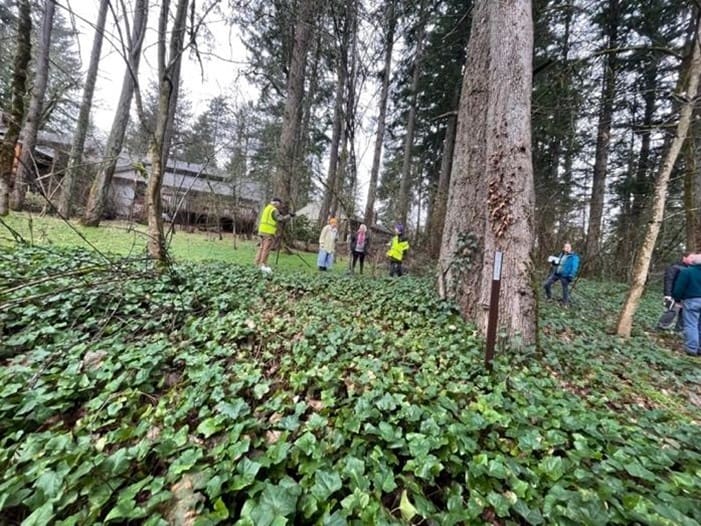
Weedy Understory
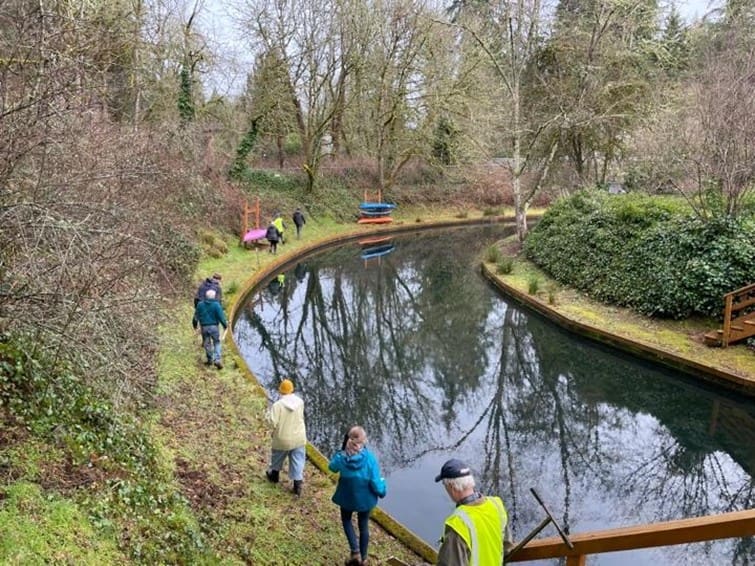
Canal looking at left side of island
Ivy Removal in Process
Opportunities to improve short-term and long-term shade on the Canal

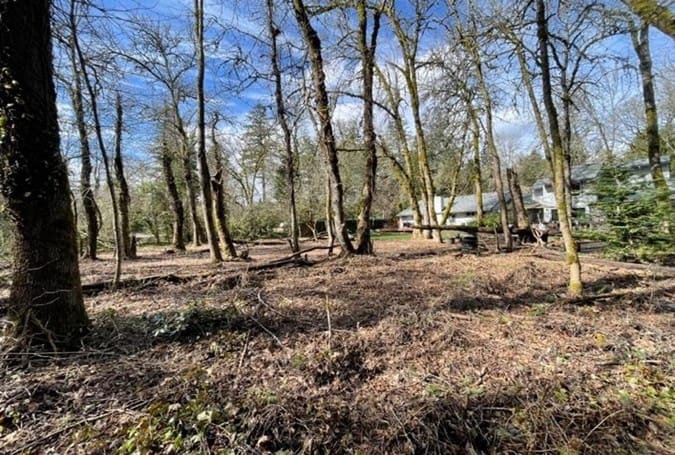
Look at the Progress our Volunteers Have Made!
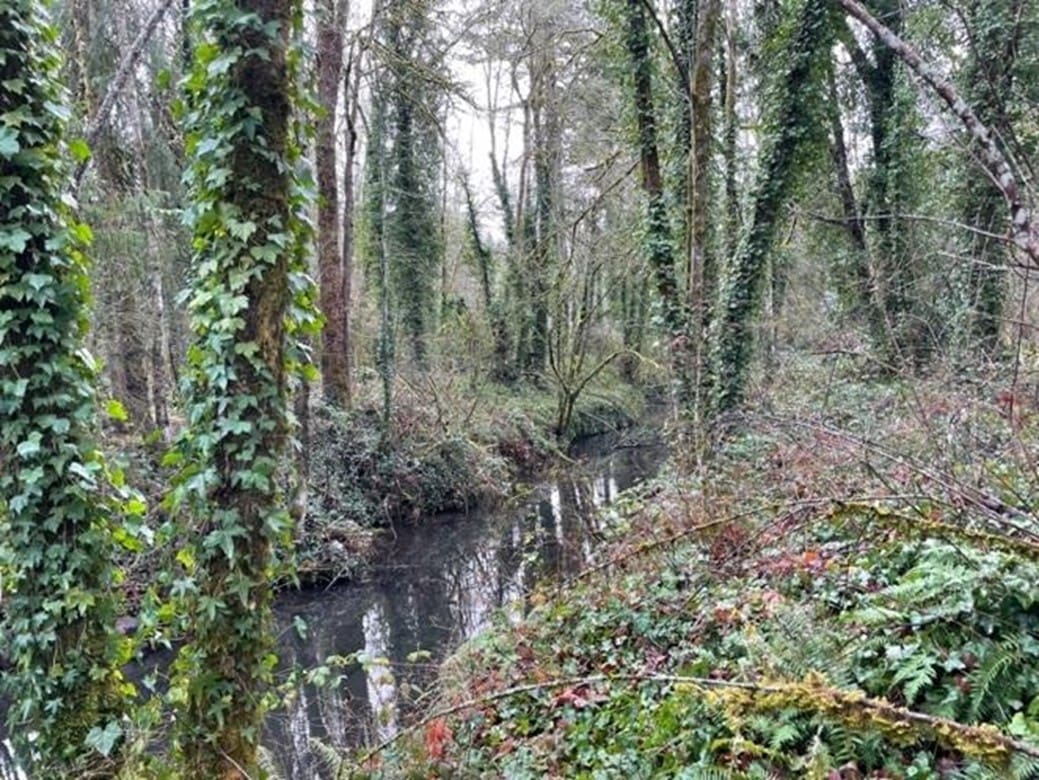
Before: Canal right side of the island
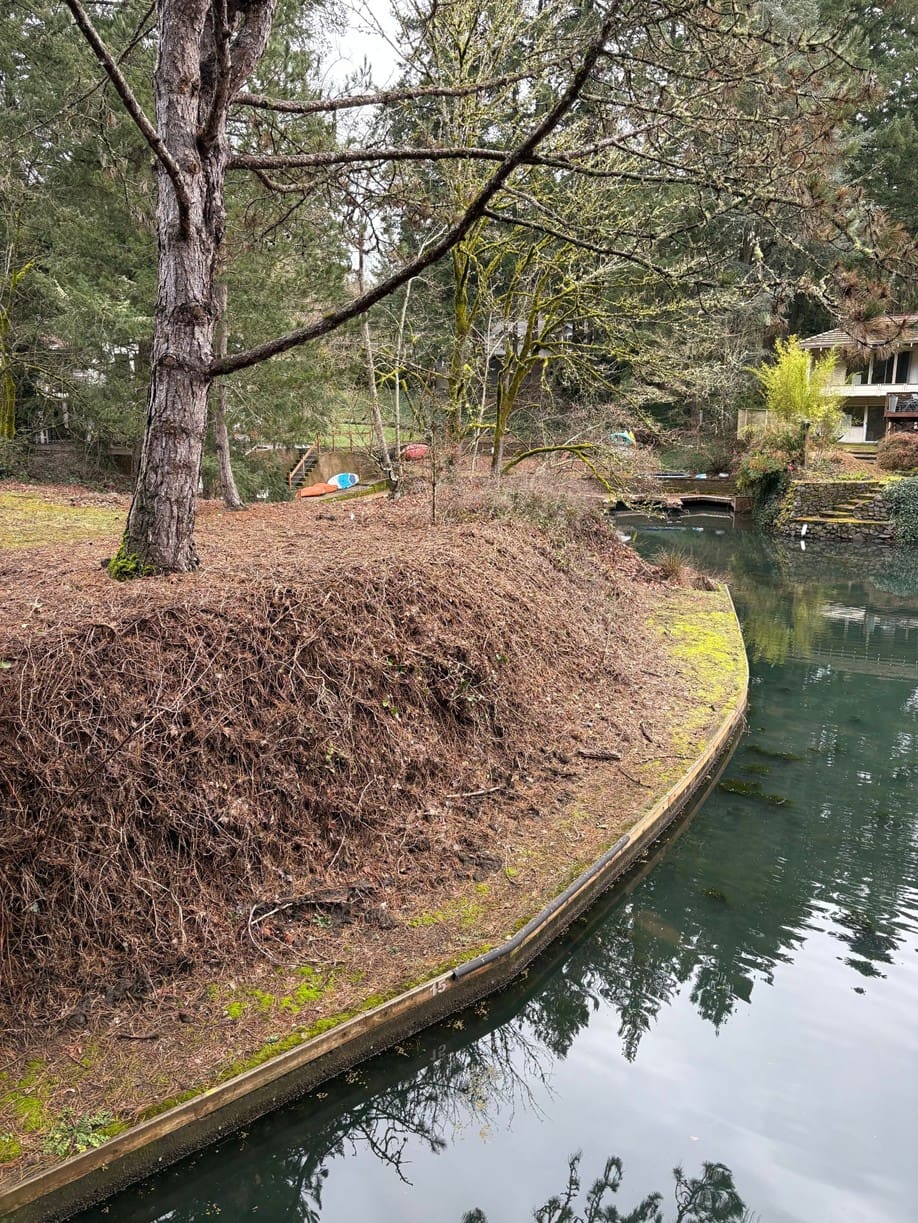
After: Canal right side of the island
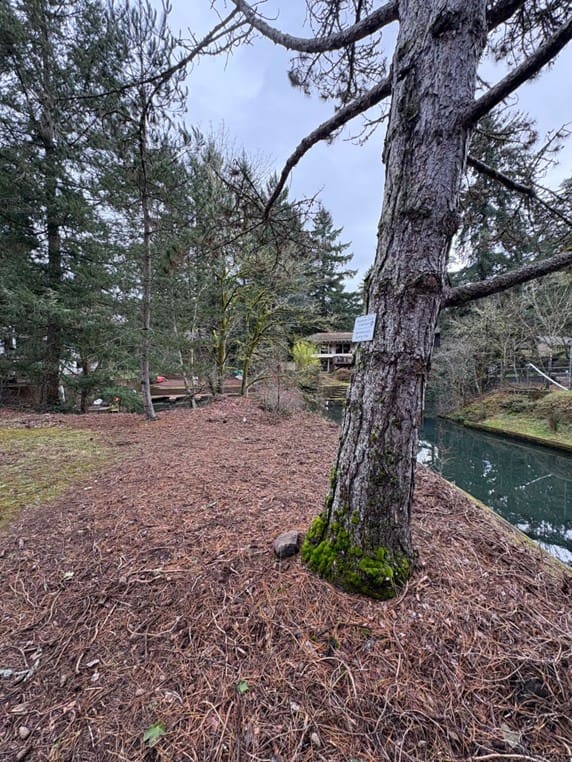
The island after the ivy was removed
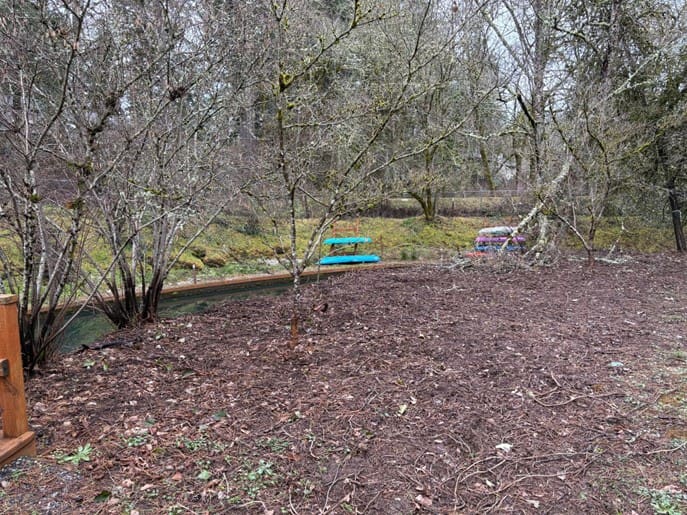
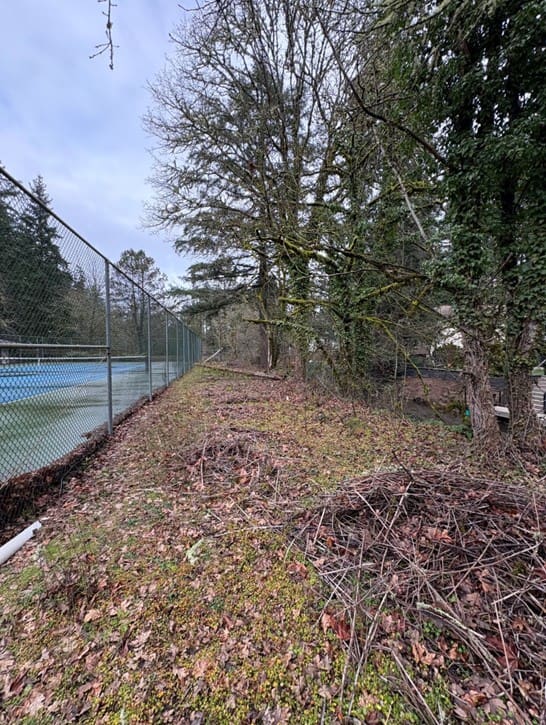
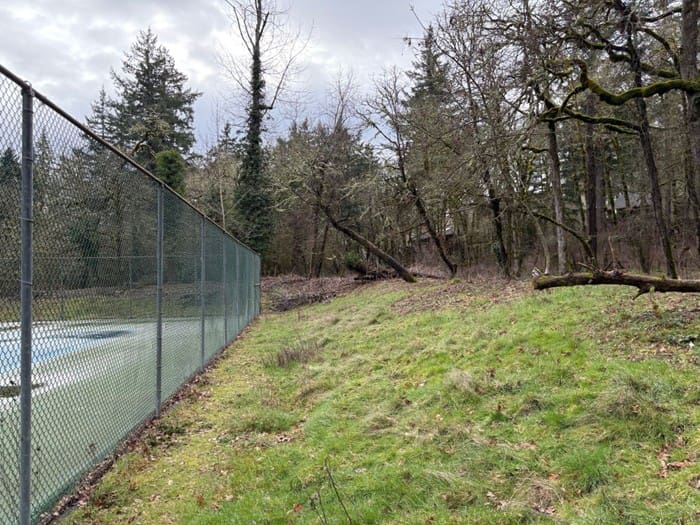
Both sides of the tennis court along canal on Woodside Circle HOA property.