
Water doesn’t disappear once the rain stops. Much of it moves quietly underground, becoming groundwater, an unseen but essential part of a healthy watershed. Understanding how groundwater works helps explain why it matters for plants, streams, and lakes, especially during dry summer months. Groundwater also plays a critical role in regulating streamflow, moderating water temperatures, filtering pollutants, and increasing the long-term resilience of ecosystems to climate change.
What is groundwater?
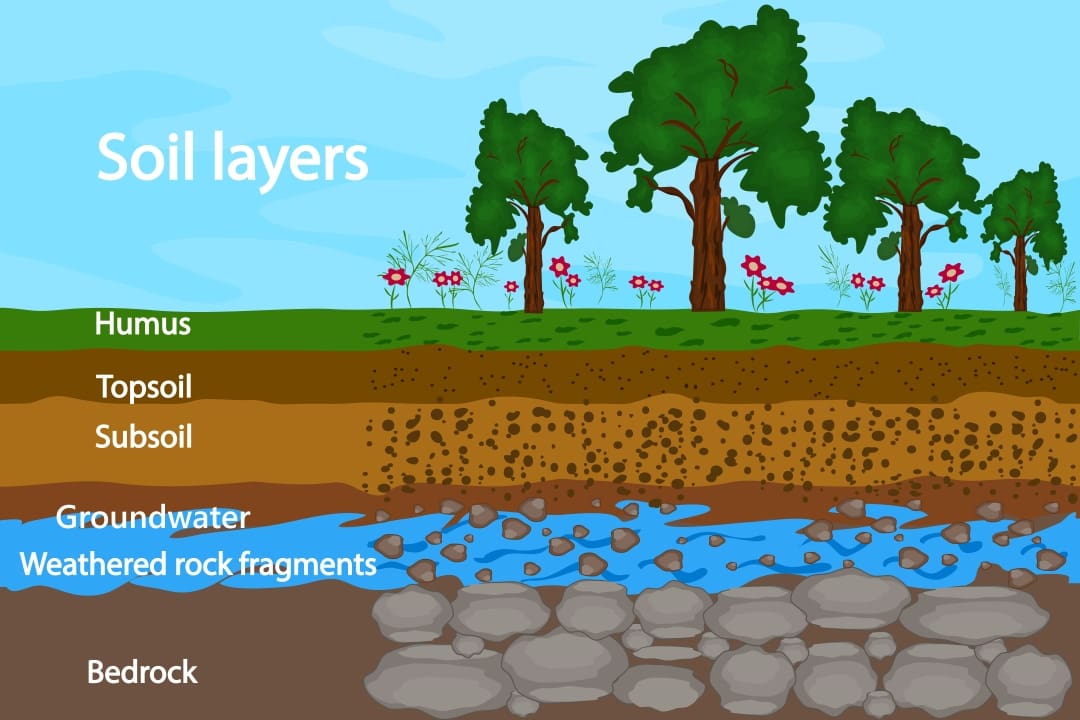
Groundwater is rainwater that soaks into the soil and moves downward through spaces between soil particles and cracks in rock. This water is stored underground in soils and aquifers, sometimes for weeks, months, or even years. Unlike surface water, which we can see flowing in creeks and rivers, groundwater does its work out of sight.
In natural landscapes with healthy soils and vegetation, a significant portion of rainfall infiltrates into the ground rather than running off the surface. This slow process is critical to sustaining ecosystems year-round. As water moves through soil layers, it is naturally filtered by soil particles, plant roots, and microbial communities, improving water quality before it re-enters streams, wetlands, or aquifers.
Why groundwater matters
Groundwater plays several vital roles in our watershed:
- Water for plants and trees
During dry months, when rain is scarce, plants and trees rely on groundwater stored in the soil. Deep-rooted trees, including native species, tap into this reserve to survive droughts, stay healthy, and provide shade, habitat, and carbon storage.Healthy groundwater systems are particularly important as summers become hotter and drier in the Pacific Northwest. Access to stored soil moisture helps urban forests better withstand drought stress, reducing tree mortality and supporting long-term canopy health. - Cool water for fish and aquatic life
Groundwater slowly feeds into streams and rivers, especially during summer. This input, known as baseflow, helps keep streams flowing when rainfall is low. Because groundwater stays cooler than surface water, it helps moderate stream temperatures, providing critical cold-water refuges for fish and other aquatic species during hot months.In many watersheds, groundwater-fed side channels and seeps create thermal refugia, small pockets of cooler water where fish such as salmon and trout can escape dangerous summer temperatures. These cold-water inputs are increasingly important as climate change raises stream temperatures across the region. - Recharge for lakes and rivers
Groundwater and surface water are closely connected. When groundwater levels are healthy, they help sustain lakes, wetlands, rivers, and streams between storms. Without adequate groundwater recharge, water levels drop, streams dry up, and aquatic habitats are stressed.This connection between groundwater and surface water is often described as the “hydrologic cycle in slow motion.” Groundwater acts like a natural savings account, storing water during wet months and gradually releasing it back into the landscape over time.
What happens in urban areas?
In cities and developed areas, many surfaces are covered by pavement, roofs, and compacted soils. These impervious surfaces prevent water from soaking into the ground. Instead, rain is quickly diverted into storm drains and streams, reducing groundwater recharge.
Less infiltration means less water stored underground for plants, less cool water entering streams in summer, and lower baseflows in rivers and lakes. Over time, this can lead to hotter streams, stressed vegetation, and declining water quality.
Urban development also changes how quickly water moves through a watershed. Fast-moving runoff can increase erosion, transport pollutants into waterways, and reduce the amount of time water spends filtering through soil. This creates a “flashier” watershed system, where streams experience more extreme high and low flows.
What can you do to improve groundwater infiltration?
Everyone can help support groundwater by allowing more rain to soak into the soil where it falls:
- Build healthy soils: Add compost and mulch to gardens to improve soil structure and water-holding capacity.
- Plant native and deep-rooted vegetation: Native plants and trees help break up compacted soils and increase infiltration.
- Reduce impervious surfaces: Replace pavement with permeable pavers, gravel, or planted areas where possible.
- Capture and spread rain: Use rain gardens, bioswales, or direct downspouts onto landscaped areas instead of driveways or streets.
- Protect existing natural areas: Forests, wetlands, and open spaces are some of the most effective groundwater recharge zones.
Even small actions taken across many properties can collectively improve watershed function. Neighborhood-scale green infrastructure helps slow runoff, recharge groundwater, reduce urban heat, and improve the health of downstream rivers and lakes.
Groundwater may be out of sight, but it should not be out of mind. By helping rain soak into the ground, we support healthier plants, cooler streams, and more resilient lakes and rivers for our community now and into the future. Protecting groundwater is ultimately about protecting the long-term health, climate resilience, and ecological stability of the entire watershed.