
Submitted by Lexi Ye, Catlin Gabel ‘26, OLWC Board Member
The adults in my life often tell me that my generation is the future. Yet I get the sense that the future is being shaped without us.
Those who make decisions on land use and conservation rarely consider the voices of youths, despite the fact that the Earth will soon be handed to us. As the generation that will live with the consequences of today’s inaction and short-term profit, I believe that we deserve to be a part of the decision-making process. It is time for youths to gain a bigger presence in the community and speak up for solutions with the urgency of knowing that sustainability is a matter of survival for us.
When young people are excluded from environmental work, organizations like our Watershed Council miss out on fresh perspectives. No matter if you’re a long-established sustainability leader, policymaker, environmental scientist, an avid hiker in the Pacific Northwest, or a passionate young community member, only when we are all working together can we create lasting change that builds a sustainable home for generations to come. I am beyond grateful that the Oswego Lake Watershed Council recognizes this and is committed to empowering youth voices through partnerships and conservation opportunities.
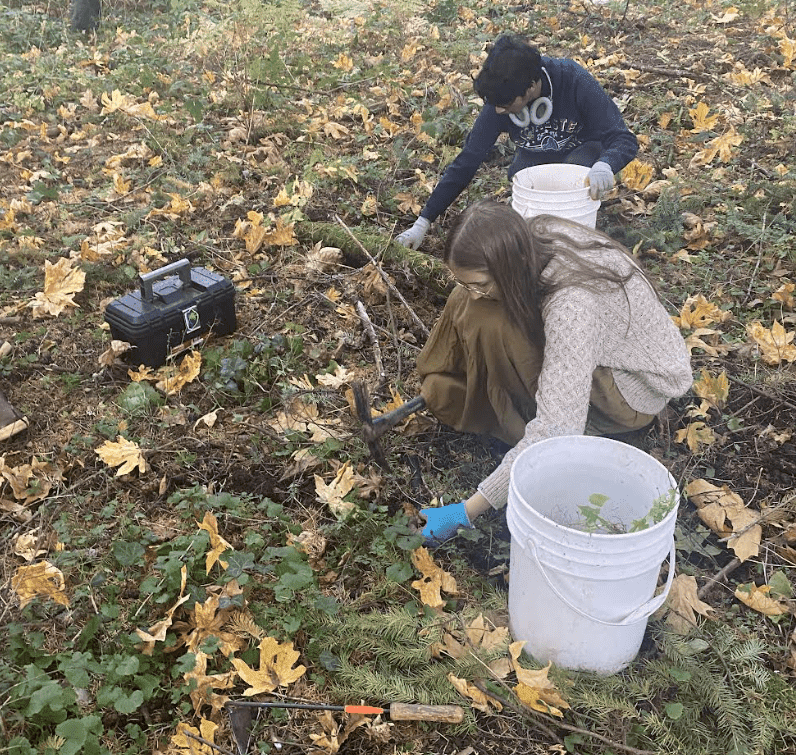
To close the gap between generations of environmental activists, local high school students, including myself, formed the Youth Sustainability Collective (YSC). Together, we aim to inspire other teenagers to take our action off campus and into the community. The Watershed Council recently partnered with YSC and a local landowner to steward a plot of land at the border of Tryon Creek Park for conservation work. YSC youths and community members are now in a dedicated effort to help reduce the land that is overrun by invasive species, often pulling ivies and removing garlic mustard. We are thrilled that the Watershed Council provided us with an opportunity for youths to not only restore native habitat, but also to develop skills in plant identification, leadership, and long-term management planning.
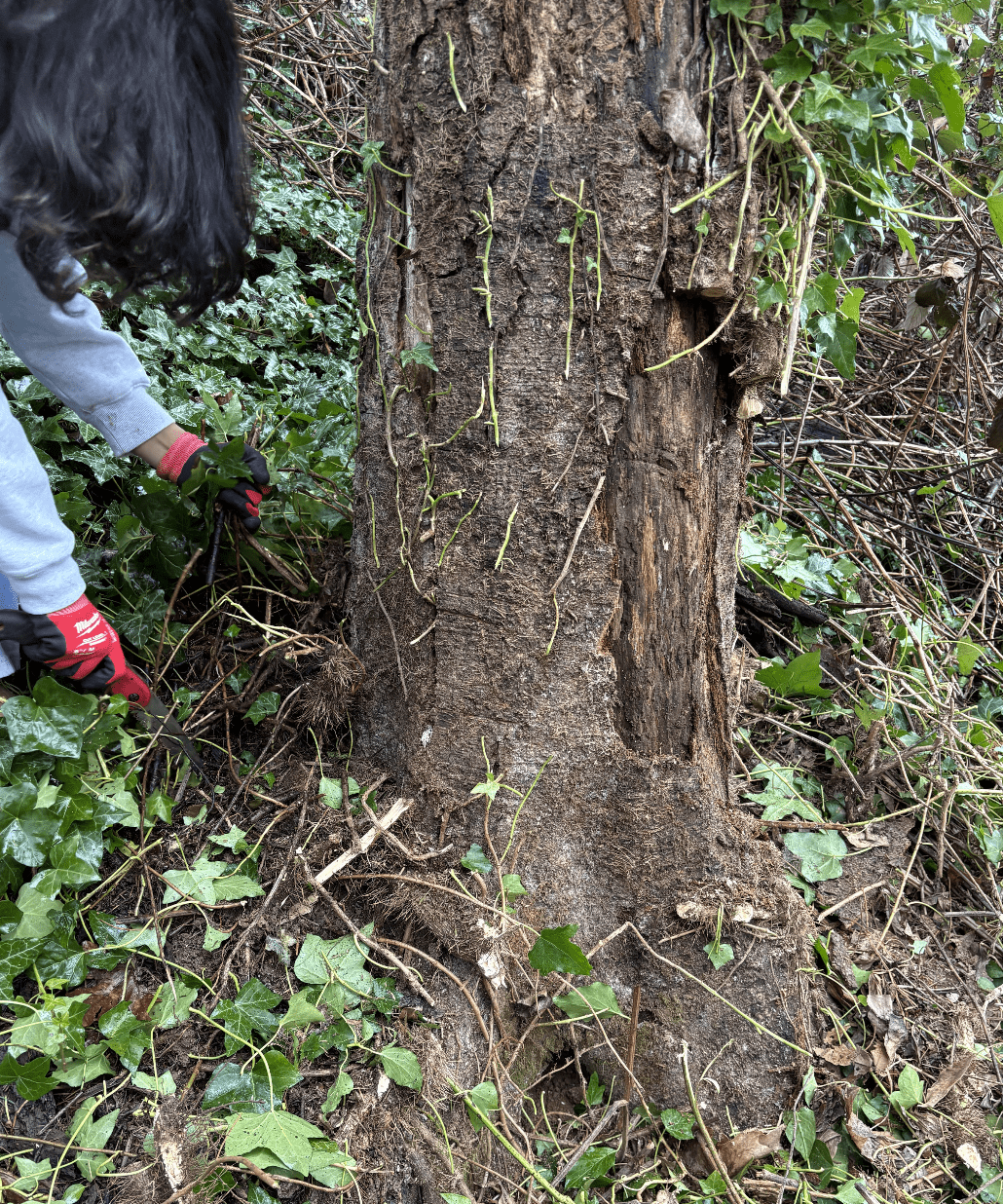
Lake Oswego High School student taking part in campus habitat restoration by removing invasive ivy.
Beyond collaborations with YSC, OLWC regularly involves students from Lake Oswego High School and Lakeridge High School in hands-on conservation opportunities. The Pecan Creek Beaver Habitat Restoration and Education Project is a great example that neatly incorporates service into Lakeridge science classes. Located along Pecan Creek near Lakeridge High School, this project brings together students, teachers, and OLWC volunteers to restore streamside habitat. The youths get to directly restore the habitat they are learning about in the classroom by propagating native plants and restoring the streambanks. To me, this project truly demonstrates how youth engagement in conservation can both strengthen our watershed and nurture the next generation of ecological stewards.
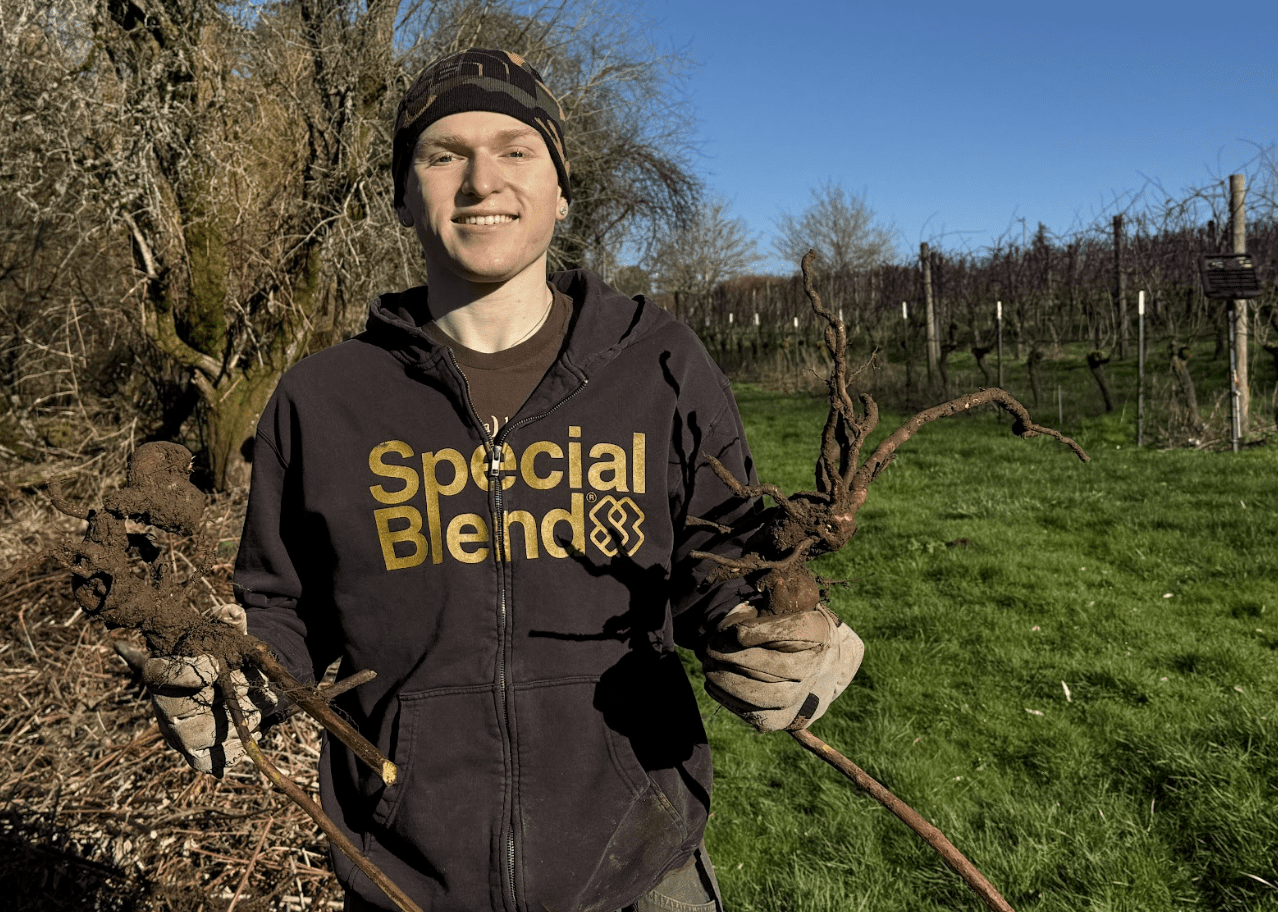
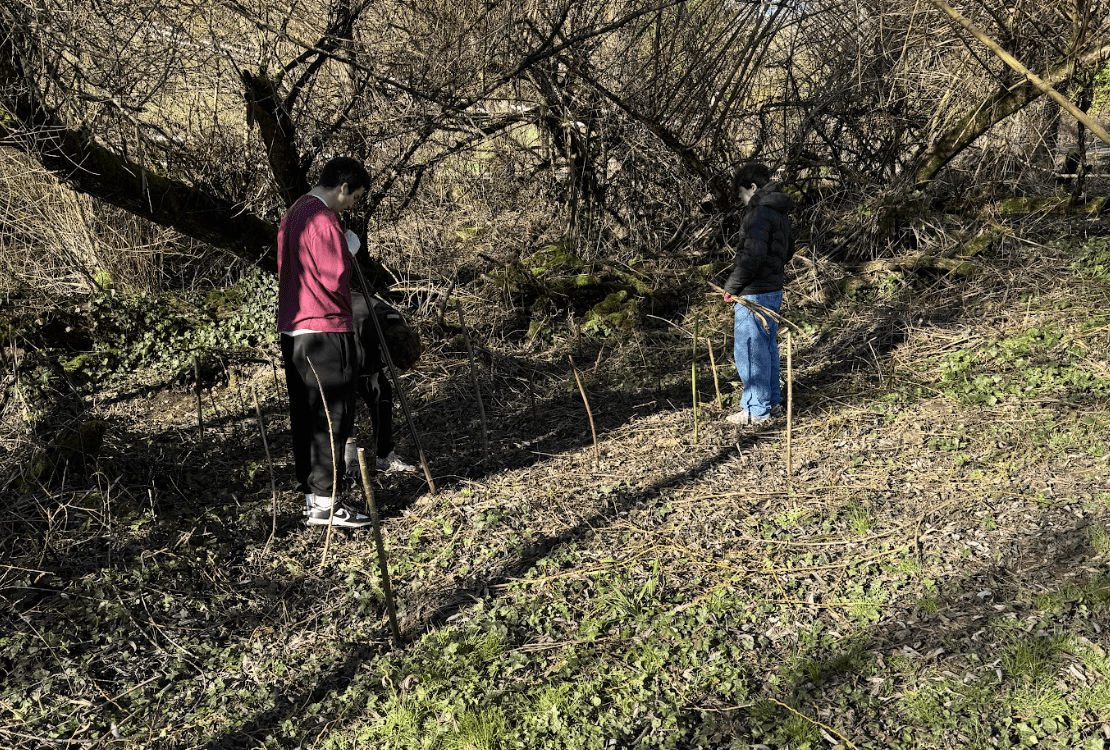
Lakeridge High School students support habitat restoration by removing invasive blackberry crowns and planting willow stakes at Pecan Creek.
In addition, the Lake Oswego High School Natural Area Enhancement Project brings LOHS students to restore on-campus natural areas. Alongside OLWC staff, the Green Team and National Honor Society students remove invasive groundcover and plant native species, actively contributing to the maintenance of their campus environment. In the next phase of the project, OLWC hopes that students will have the opportunity to help develop a maintenance and monitoring plan for local natural areas. This would allow them to move beyond short-term community service and learn how to create a lasting impact on the green spaces around them.
Through the partnership with YSC and projects with high schools, OLWC has deeply supported the climate action endeavors of youths in Lake Oswego. As a teen who felt voiceless, it is encouraging to see this commitment reflected across the Watershed Council. I am hopeful about what becomes possible when young people are invited to advocate alongside experienced environmental leaders.