Every time it rains, stormwater moves across our neighborhoods and plays a major role in the health of our streams and Oswego Lake.
What is Stormwater?
When rain hits roofs, streets, parking lots, and other hard surfaces, water can’t soak into the soil. Instead, it runs rapidly across the land, picking up sediment, fertilizers, pesticides, oil, and other pollutants. That polluted runoff flows through storm drains, creeks, and eventually into Oswego Lake and its tributaries, affecting water quality, fish and wildlife habitat, and our community’s health and enjoyment of the watershed.
What Stormwater Does in Our Watershed
- Carries pollutants into streams and Lake Oswego, degrading water quality.
- Increases erosion and destabilizes streambanks when rain moves quickly across hard surfaces.
- Reduces groundwater recharge, so streams run lower in dry months.

How OLWC Addresses Stormwater Challenges
The OLWC is not a regulator, we are a community-led, non-profit watershed stewardship organization that works to improve water quality and watershed health by helping people, neighborhoods, businesses, and homeowners take effective action.
We implement solutions that reduce stormwater pollution and enhance natural processes, including:
- Riparian and urban forest planting: planting native trees, shrubs, and groundcover along streams, neighborhoods, and public spaces to slow runoff, filter pollutants, and stabilize soils.
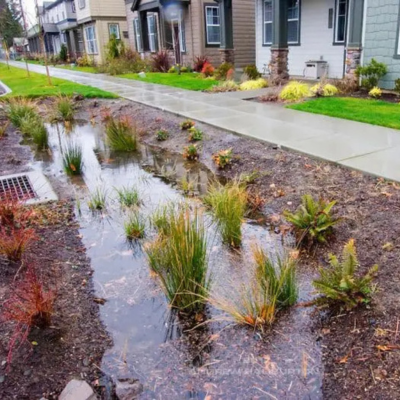
- Green stormwater infrastructure support: encouraging rain gardens, bioswales, permeable surfaces, and other nature-based infrastructure that keeps water on the landscape instead of rushing into drains.
- Community education and support: helping landowners and residents understand what stormwater is, why it matters, and how everyday actions make a difference

What You Can Do at Home
Small actions on your property can make a big difference:
- Plant native trees and shrubs to stabilize soil and increase water absorption
- Improve soil health by adding compost and avoiding compaction
- Reduce hard surfaces where possible or replace them with permeable materials
- Install rain gardens or bioswales to capture and filter runoff
- Direct downspouts into landscaped areas instead of driveways or streets
- Limit pesticide and fertilizer use
- Maintain vegetated buffers along creeks and drainage areas
Every property is part of the watershed. By helping water move into the ground rather than across the surface, you support healthier streams, a more resilient lake, and a stronger community watershed ethic.
OLWC provides resources, education, and volunteer opportunities to help residents take these steps — from workshops to planting events to one-on-one guidance.
Looking for the bigger picture?
Explore how headwaters connect to the lake and why upstream stewardship benefits the entire watershed.